
On The Record: Brown’s Felix Mercado
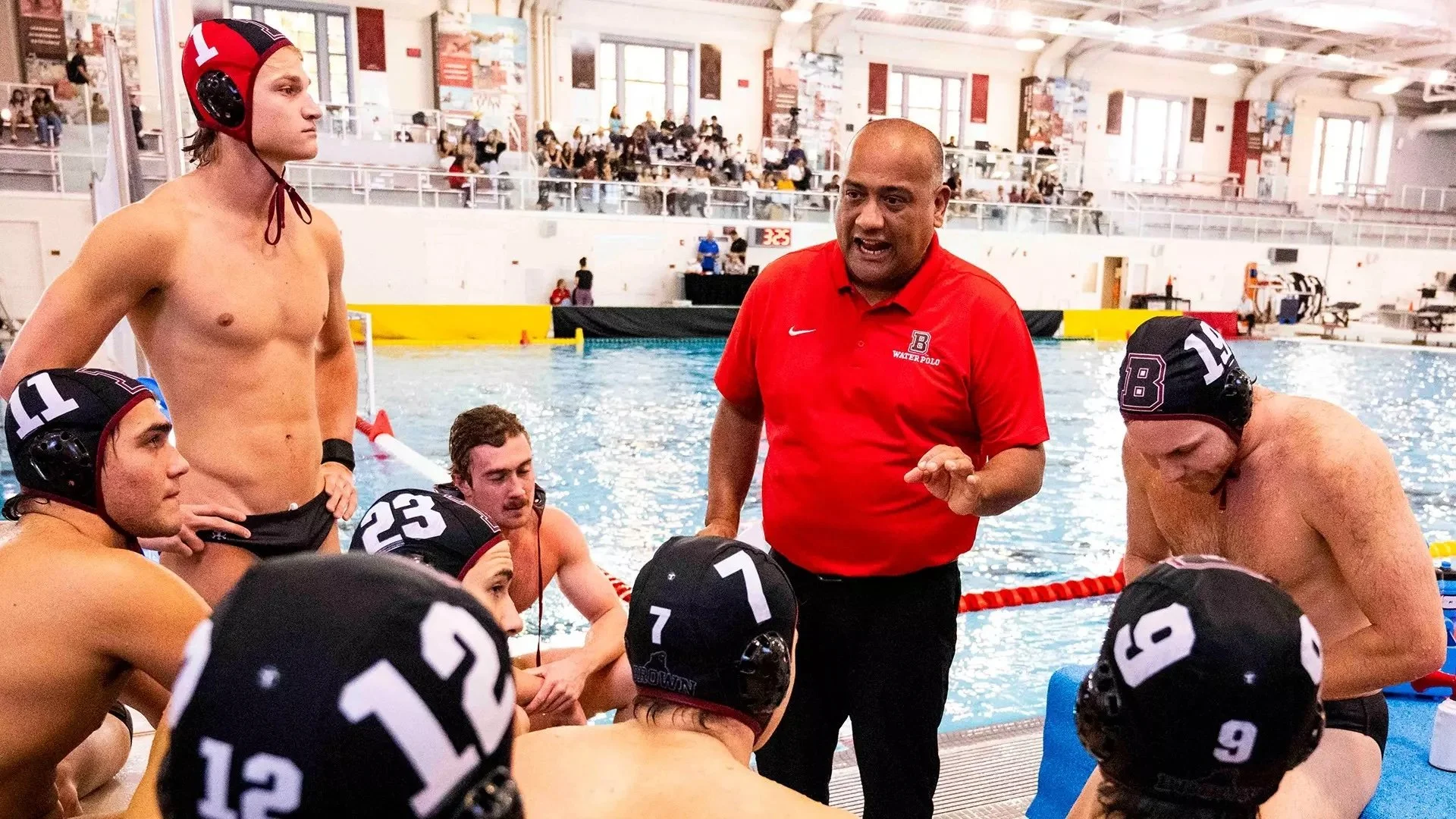
Brown’s Felix Mercado with his men’s team at the Katherine Moran Coleman Aquatics Center. Photo: Brown Athletics
THE BRONX, NY. Felix Mercado is as knowledgeable and respected in American water polo as anyone in the sport. For the past 19 years, he’s been Brown University’s Director of Water Polo. In addition to his duties as the Bears men’s and women’s coach, since 2013 he’s also served as the president of the Association of Collegiate Water Polo Coaches [ACWPC], one of the country’s most influential polo associations.
Add in that he’s worked with the US men’s national team, and it’s safe to say that Mercado understands how polo exists in a country that often doesn’t know what to make of the sport.
[Brown’s Mercado, LIU’s Juarez and Byrd on Collegiate Water Polo Recruitment]
Following a tough performance two weeks ago a against a dominant Fordham program—a 23-13 decision that saw the host Rams open the match with six goals before the Bears got on the board—Mercado spoke about his team's prospects for the Northeast Conference Water Polo [NWPC] tournament (a third-place finish), his successful stewardship of the ACWPC, and a perennial hot button topic: why foreign-born athletes continue to dominate NCAA collegiate water polo.
This interview has been edited for brevity and clarity
***
- You faced Fordham, the East’s best team, in their pool in a tuneup for your big event, which is the Northeast Water Polo Conference Championship, which you’ll host.
Today wasn't pretty. There were a lot of self-inflicted wounds that a team like Fordham will take advantage [of]. So maybe it’s good for our guys to understand they have to be better, especially offensively and not turn into counter attacks. But look, we got a week to get ready.
- Last year Brown performed well at Princeton, upsetting Harvard to make it to the NWPC final. How does Bear water polo look, hosting this year’s tournament, sure to face Harvard and perhaps Princeton, two of the East’s best teams?
Look, we have a shot. We've been competitive with our conference opponents this year. Being at home, I hope our guys respond.
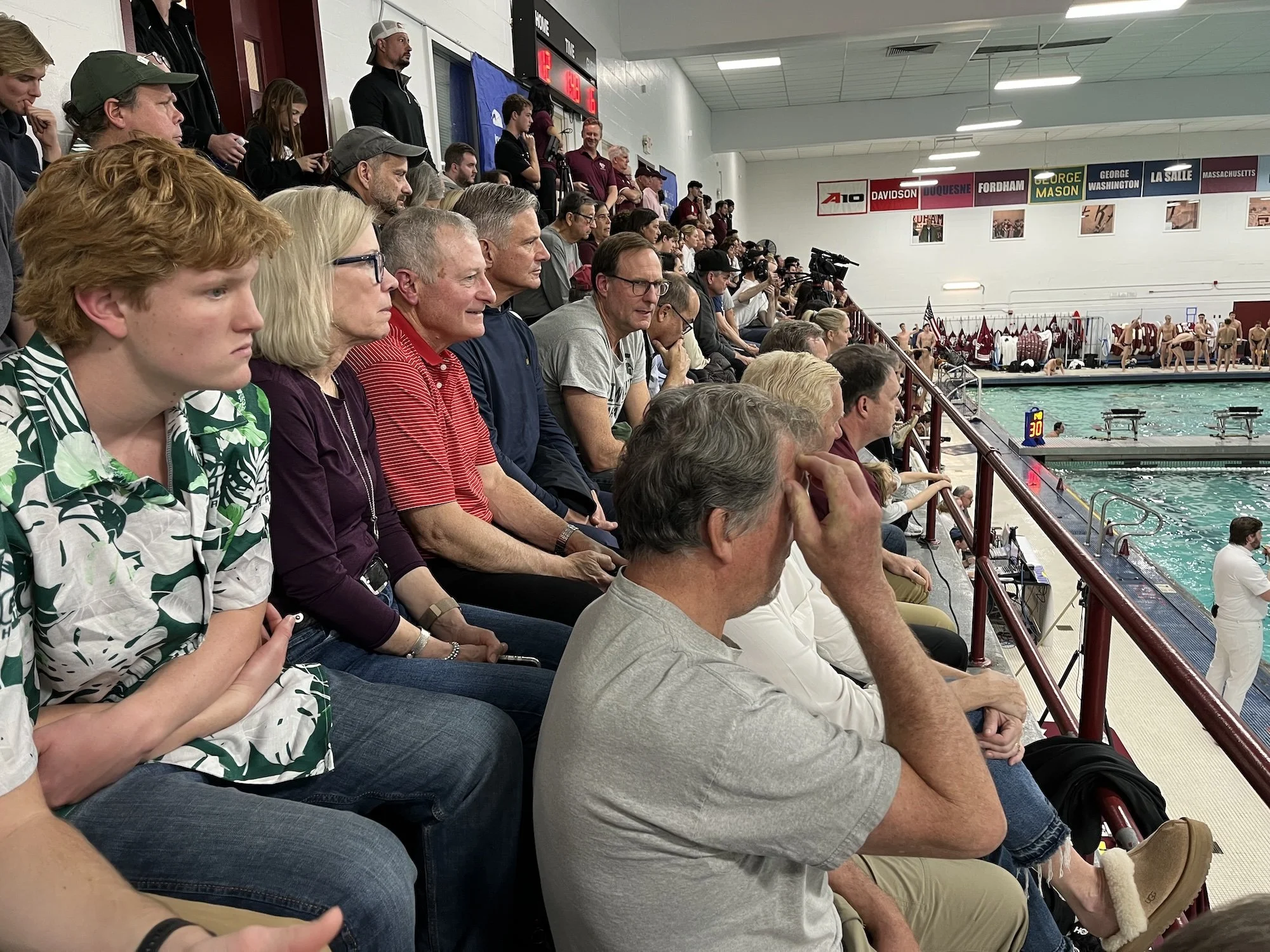
Fordham is a tough place for any visitor. Since 2021 the Rams are 45-2, with both losses coming against St. Francis Brooklyn, which no longer has a team. Photo: M. Randazzo
I think we've done everything we needed to do this year to put ourselves in position. We did lose three key players to injuries [William Griswold, Trey Rodgers and Mate Tymcyna] who aren't playing. The fact that we're as competitive as we are [is a] testament to the guys working hard. We feel good about it, but as I said, it's up to the guys right now. This is their opportunity to shine. I’ve got to stay out of the way and not call the wrong time out.
- You’re the coach, so I suspect you do more than just stay out of the way! Brown didn't beat either Harvard or Princeton this season, but you were in all four matches.
We had leads against both of them and played them tough through three quarters. Then again, we made some mistakes. Look, they're both good teams, very well coached. We're just trying to make their lives as difficult as can be. Hopefully it gives us an opportunity to win a championship.
- The Crimson and the Tigers have had a stranglehold on the title since you won in 2014. So maybe it is time for another team….?
Don't forget about St. Francis. St. Francis was there too.
- Nice that you remember the Terriers! They never won a conference title after you won. Princeton (7 titles) and Harvard (3 titles) have captured the past 10 NWPC championships.
[Not Only Fair Weather Fans Are Rewarded]
Let’s switch gears to your role as the president of the Association of Collegiate Water Polo Coaches [ACWPC]. If one were to take the temperature of the sport in America, especially at the collegiate level, what would they see?
Look, we're in a way better place than we were 12 years ago, as far as leadership [and] sustainability. We are adding programs. We're more in tune with how the NCAA works. We're getting away from this mentality of where we want certain things but don't understand that we have to follow the rules and see how we can take advantage of them to benefit our sport.
I think that we have good leadership… John Abdou [ACWPC Executive Director] is amazing. He's absolutely great.
I think our sport's in a good place. We’re also in a situation where we have to make sure that we're adding programs in the right [schools]. I think that every Olympic sport is in the same boat as far as growth, but as far as our growth, we know that Division III is the most critical area.
But that doesn't mean we're not adding, we shouldn't pursue Division I schools like St. Mary's [College].
[Saint Mary’s College Launches Division I Aquatics Program Featuring Swimming and Water Polo]
On that score, you're at an Ivy League institution, which doesn't take graduate students and does not allow for NIL (Name, Image, Likeness) money. Is that correct?
Correct. Well, it's not as easy, not as accessible as other places.
What’s driving collegiate athletics is the concern that NIL is transforming intercollegiate sports.
No, because that money's not going. Look, I don't think that really has any impact on us. If there's any schools that might have issues it might be the bigger Power Four conferences (PAC).
Overall, I think we're fine. Colleges also are trying to get more kids to go to their school. So, sports like water polo helps them. It's all about enrollment; schools that need enrollment are looking to add sports. We just have to make sure that water pole is one of the schools they're talking about.
The Ivys are in a class amongst themselves. They are DI, don’t offer scholarships, don’t allow for red-shirting… yet they aspire to compete with the country’s top athletic and academic colleges. Dustin Litvak, head coach at Princeton, another Ivy League member, has said that athletes shouldn’t be penalized by where they come from.
[On The Record: Princeton’s Dustin Litvak]
Foreign-born players are now as prevalent as ever in NCAA polo. Is this a good thing?
This is a pretty easy question to answer. Coaches keep their jobs if they're successful. Their job is to bring in the best players. I mean, that's just the way it is. It doesn't really matter where you're from. I think it comes down to: coaches have to win. And if they're evaluating players, it'd be different if they were turning down, if Stanford was saying, no, we don't want to keep our job because we want to bring in two Hungarians. That's not happening.
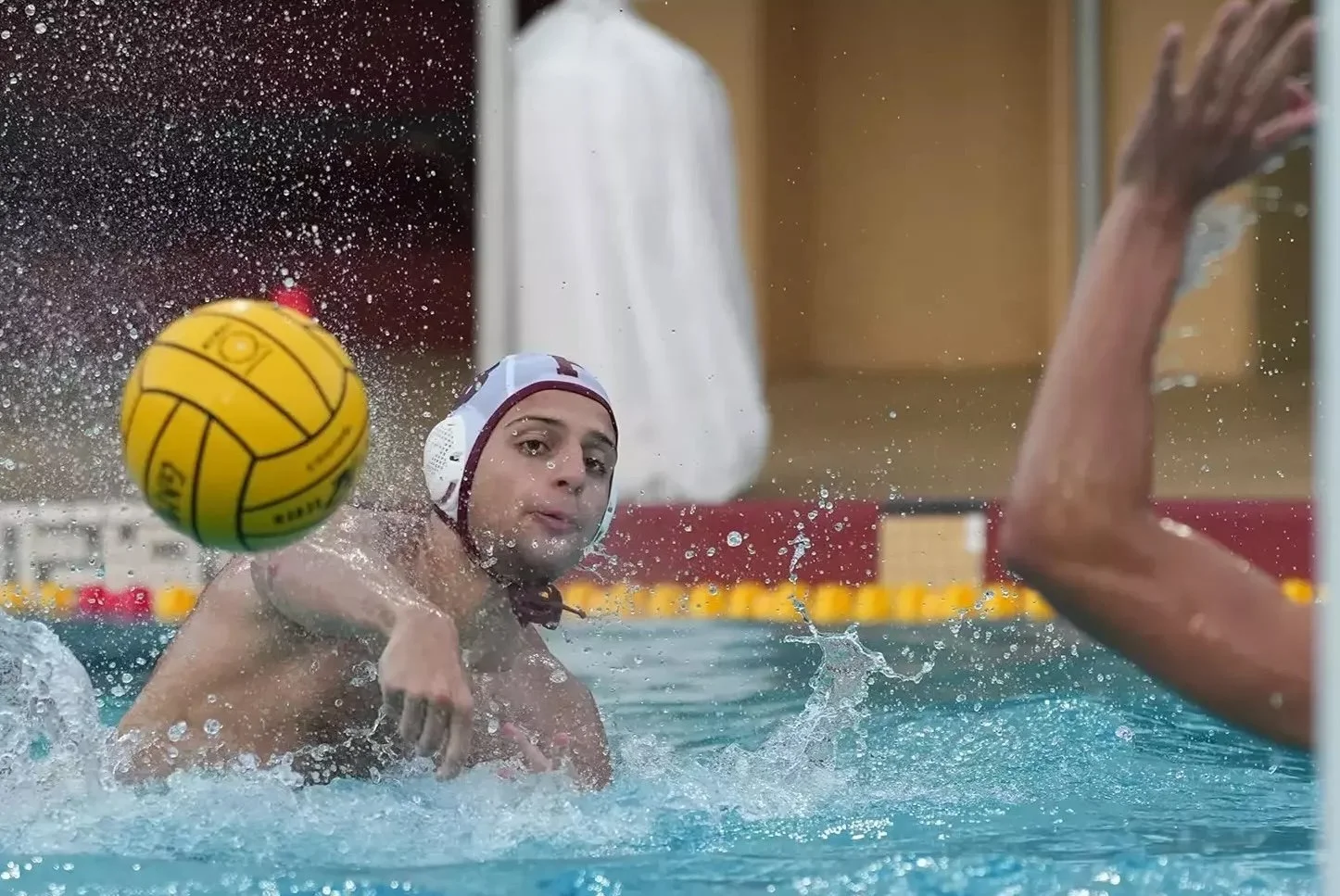
Fordham’s Luca Provenziani is on the Cutino Award watch list. Photo: Catharyn Hayne
I think all of us are trying to bring in the best players we can. The one thing that European players have an advantage over the domestic kids, they have a lot more games under their belts. They play a lot more water polo in Hungary and Serbia and Croatia and Italy than they do in the States. That's just a fact.
That doesn't necessarily mean that they're better players nationally; our U20 team took a silver medal [last summer in Croatia] and we should have won the gold. So it's not like we're not competing. It's not like this is impacting our ability to be successful domestically.
The better players we can get in every university, the better the sport is because that's going to elevate everybody else. Look, maybe Stanford has eight [foreign] guys, but that frees up spots at Santa Clara. That frees up spots at UC Santa Barbara, that frees up spots at some of these others [schools], they get players that might typically have gone to Stanford.
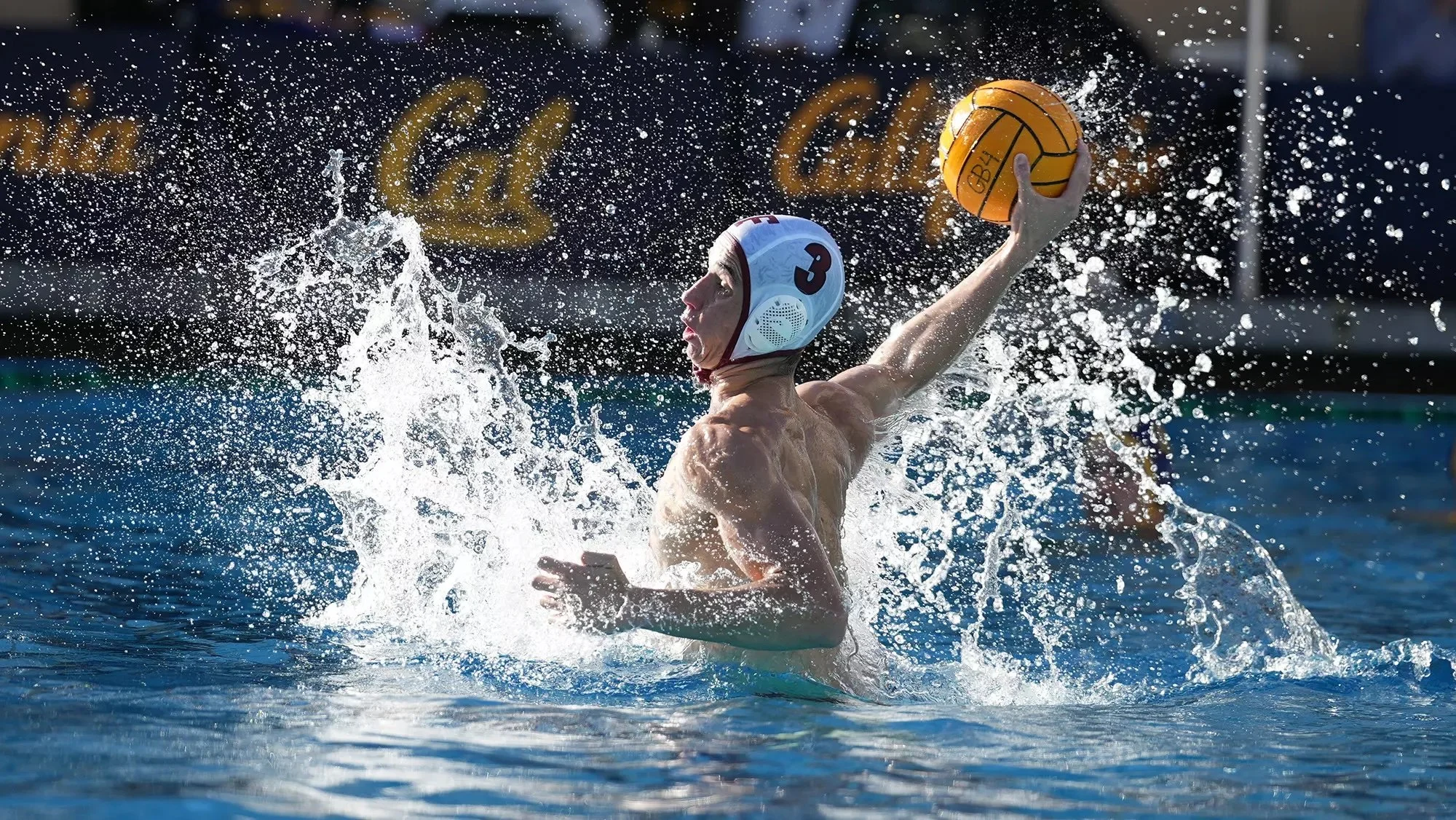
Fordham’s Andras Toth, on the Cutino watch list, is the East’s best player. Photo: Catharyn Hayne
It's not like they're not playing polo. Those kids are finding places, so I think sometimes people forget that coaches have to win and to keep their jobs and their job is to bring in the best players they can.