
On The Record: Gabor Sarusi, San Jose State Water Polo Coach
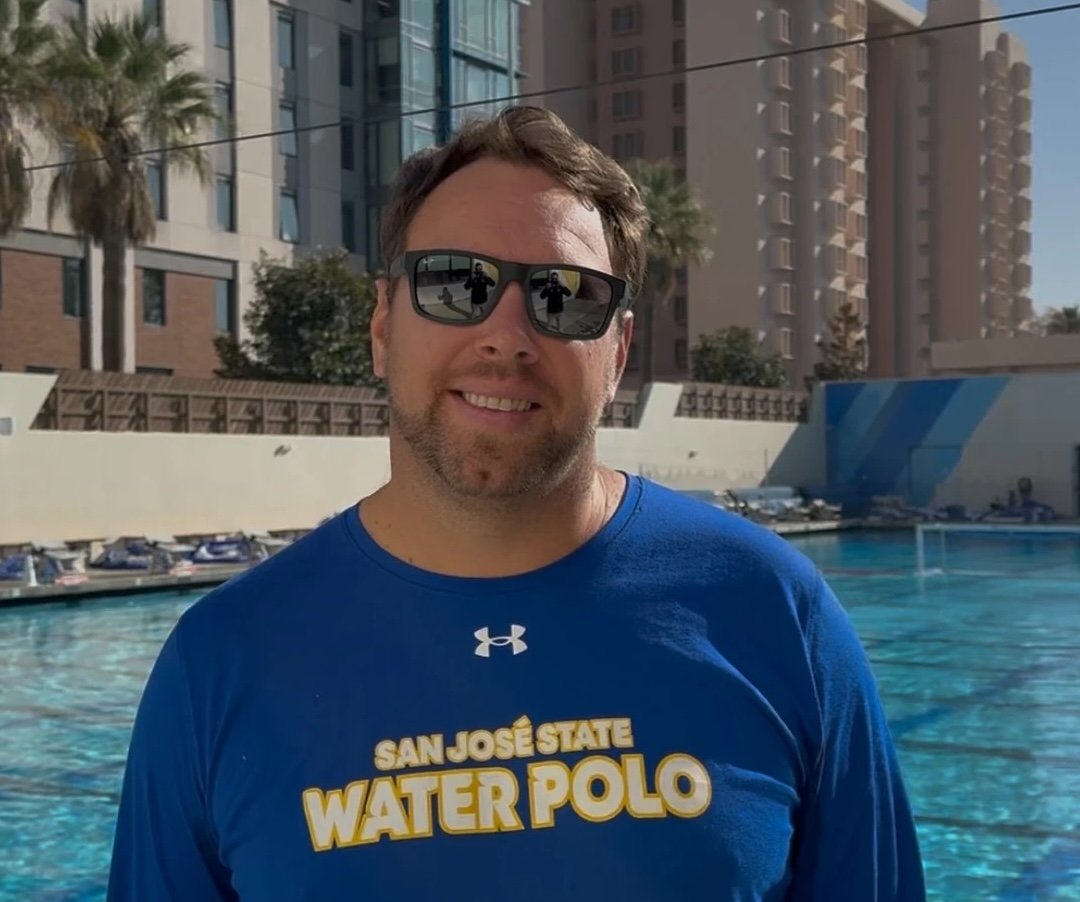
San Jose State University Men’s Coach Gabor Sarusi. Photo: SJSU Athletics
Editor’s Note: My meeting with Coach Sarusi last month at Fordham University is not the first time chatting with the San Jose State coach. In 2018 we spoke when he was leading the Spartan women:
[Five Questions for Gabor Sarusi, San Jose State Women’s Water Polo Coach]
THE BRONX, NEW YORK. One might expect that to watch high-quality California water polo teams in action you must go West. On a recent visit to this coast, the San Jose State men’s team found themselves in the Bronx—and emerged (relatively) unscathed from a contest against the high-flying Rams of Fordham University.
In a contest last month at the Messmore Aquatics Center, part of the Vincent T. Lombardi Memorial Center (yeah, THAT Vince Lombardi), the Spartans faced the Rams in a first for local water polo fans: San Jose State playing in New York City. In an entertaining contest between two Top Ten programs, the home team emerged with a decisive 14-10 win, extending a season opening win streak that ended early this month during a trip to California.
[Water Polo Comes Up Short at #1 UCLA]
For SJSU Head Men’s Coach Gabor Sarusi the trip was all positives, no matter the outcome. Thanks to generous support from a Spartan supporter, Sarusi, his family and his team got to tour New York City, compete against the East’s best teams, and take a big bite out of The Big Apple.
Coming to NYC is not a homecoming for Sarusi, a Hungarian native who played collegiate ball at Golden Valley State and USC before ending up in San Jose in 2015 helping then Head Coach Bruce Watson revive Spartan water polo. He did compete for the New York Athletic Club—helping them win a USA Water Polo National Championship—one connection to the so-called “Greatest City in the World.”
But by bringing his team East for the second leg of a home-and-home with Fordham, Sarusi cemented that when you want to face this coast’s best, the Bronx is where you want to be.
This interview edited for content and clarity
Man with a Hat: This is a big deal! San Jose State comes out East in September. Your team played in Princeton then traveled north for a match against #5 Fordham—a first ever visit by the Spartans to the Bronx. What allowed you to come here early in the season?
Gabor Sarusi: We're fortunate to be able to come over here because it's a great team building experience. Thankfully, we have a donor who stepped up and said, "Hey, we want you to take the team to the East Coast, take the whole team," which is very generous.
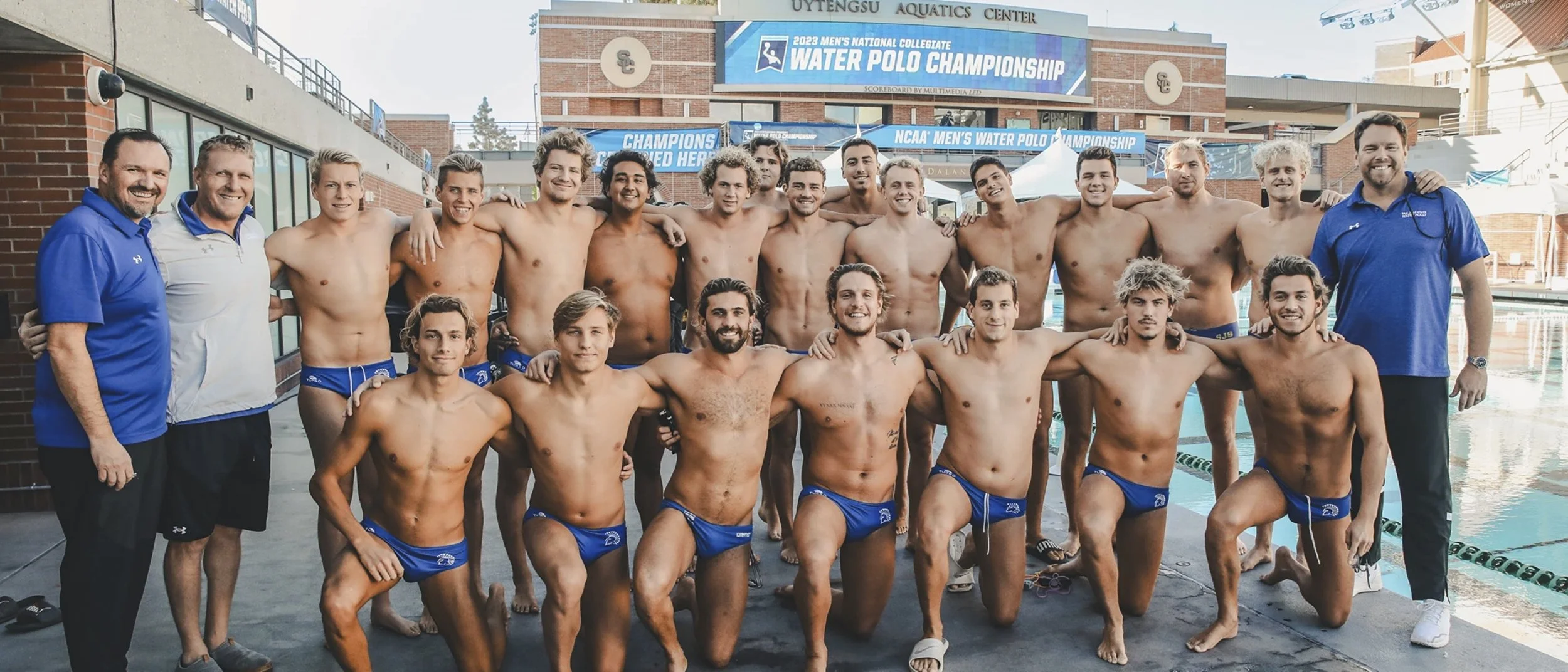
SJSU Spartans at the 2025 NCAA Men’s Water Polo Tournament. Photo: SJSU Athletics
And when we came out, we want to make sure that we played high-level games. That's one of the reasons we had a tough schedule.
In the end of it was a really good experience, not just looking around and being tourists, but getting the team better every game we played.
- You played Princeton and Fordham, teams on this coast who want to play teams like you early for their development. How do you rate the Tigers and the Rams?
Fordham has been a powerhouse the last three years. This is their fourth year that they’re really amazing. I'm sure they appreciated us coming out because they're coming to us [last year, a 10-9 Fordham win in San Jose]. It's nice to reciprocate.
Both [Princeton and Fordham] are very deep, well coached and very talented.
I don't know if we're going to see each other in the rest of the season. Maybe if we both make it to the NCAAs, but it was a good preparation for both teams.
- That's why I'm here; to watch great West Coast teams play good East Coast teams. Now, you played for Jovan [Vavic] at USC.
Let's not get into that. It was almost two decades ago [Laughs].
- More to the point, Jovan never took his teams out East. I've seen UCLA, I've seen Cal, I've seen Stanford, I’ve seen Pacific. I've seen all the top teams come East. Not the Trojans.
Was there an idea at USC it's better to stay home to get better as opposed to coming East? USC has a great brand, I'm sure a lot of East Coast fans embrace them.
Current NCAA water polo is completely different than what it was two decades ago. There's way more and way better teams on the East Coast than when I was playing. It just didn't make sense back then.
The four powerhouses [Cal, Stanford, UCLA, USC] were so above everybody else that it didn't make sense for them to come out. I remember them going to Europe instead—that was their vacation/training camp before the season started.
I can't blame them for it.
- Well, there has been a change in East / West balance… and it’s Fordham. They took USC to overtime two years ago when the Rams were number one and undefeated.
[Fordham Water Polo Moves To Top of CWPA/NCAA Poll]
Let's talk about your current conference situation. You want to win [the WCC] again. What will it take for San Jose State to repeat for the third time in the last four year?
It's going to be a long path. We have some of the foundation pieces that we need to get there, but we have to work on it. Our conference is crazy strong. Anybody can beat anybody any given day.
I’m not saying [this] to be politically correct. I think it [will] come down to one or two possessions, differences between teams, especially in the quarter [and] semi-final games.
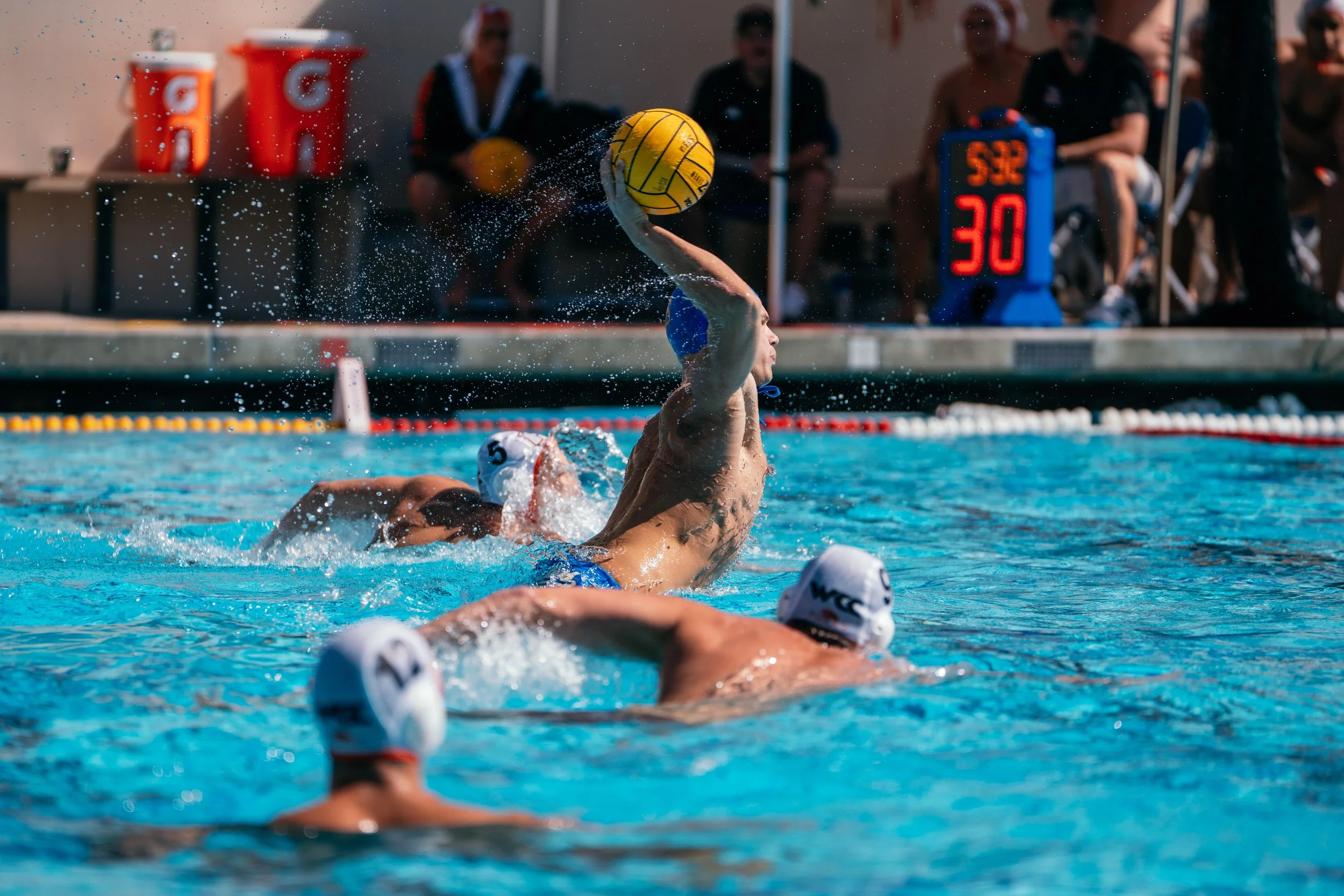
San Jose State’s Sam Keightley a 2026 Cutino Award Finalist. Photo: SJSU Athletics
What will it take? We know how to get there. We went [to the finals] three years in a row. I'm hoping to [make it] four years in a row. We know we have to earn it.
- From what I've seen so far, you have a strong team. Talk about some of the talent because obviously you've got a great mixture. Local California athletes and foreign-born kids like Sam Keightley (named to the Cutino Award Watch List). It looks like it's a winning formula.
When we started working in 2015, we had heavy recruiting on the international side because we couldn't get anybody from California or really from anywhere in the US—nobody knew about San Jose State. We had to reintroduce the program.
I think we're to the point, especially the last three seasons, that we are doing well enough that local and the Southern California kids look at us, are seriously thinking about us. And I'm very fortunate to say I'm happy with the recruiting classes.
- What you see with Fordham is they've brought in incredible foreign players, including Hungarian guys I'm sure you know about. It's exciting, but it's also like: Can we get more American kids in the water? At the end of the day, we want to see great water polo. It's also great to see your kid play.
Definitely. I think there's different goals and different approaches. I think you look at it as a broader perspective, see what a winning formula in the long term would be, not just the short term.
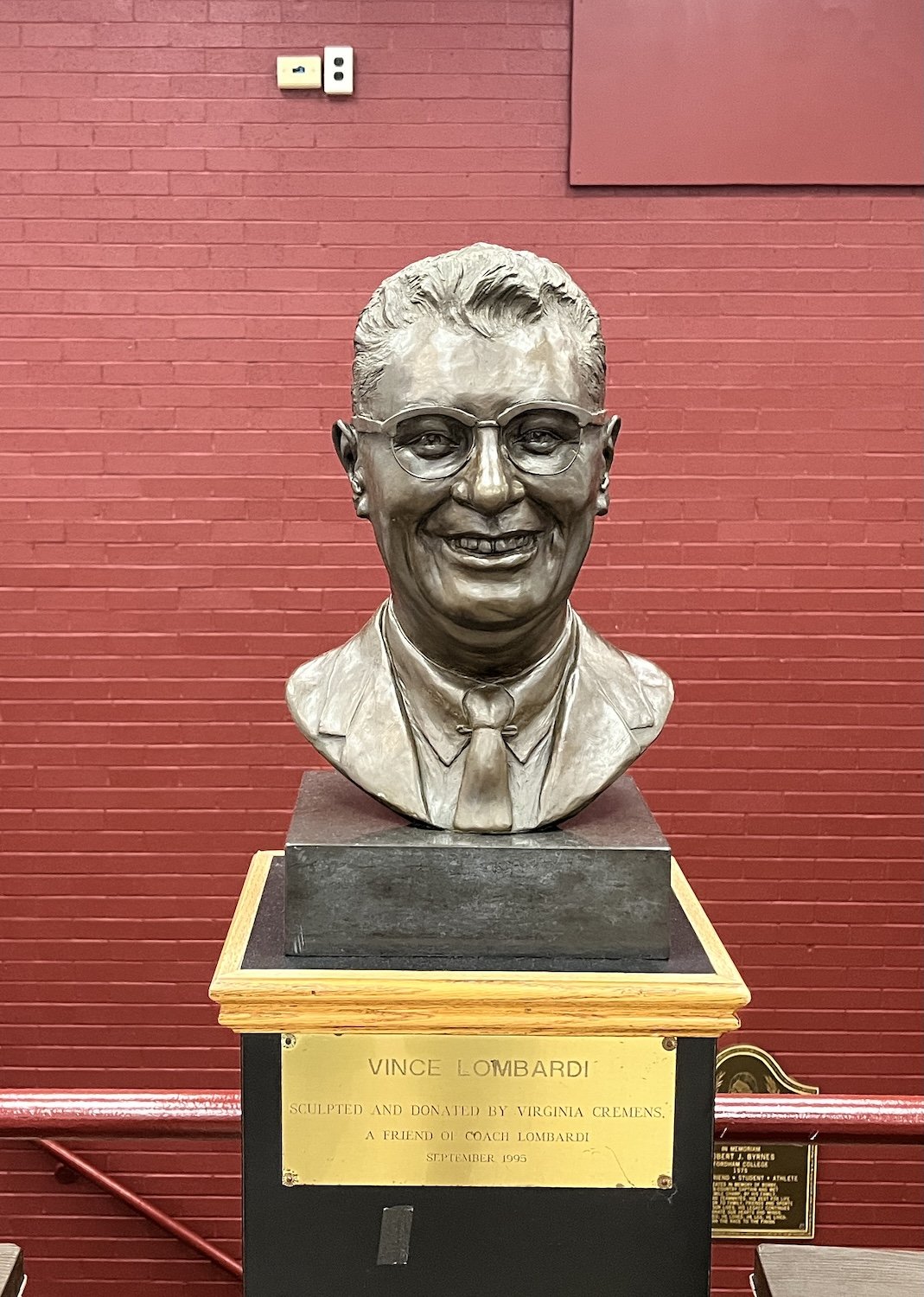
Bust of legendary Fordham graduate Vincent Lombardi graces the entrance of the Rams’ Messmore Pool. Photo: M. Randazzo
It's important to have your foundations and get your local and some of the other pockets of California recruiting to get the talent that's usually [going to] the top four teams. So, it's important to see that we are looking at as a person, not as an international or domestic.
We want to bring in people that are hard workers, they're good people, they're good citizens. Where they were born, I think that's more of a second question. Some of them are staying here [in the US]. They're becoming taxpayers over here. It's not like they're just going home.
And in our case, you can't see the books and I'm not going to talk about it too much, but our funds are very limited. We are a state school. Fordham and some of the other schools, they have more than five times as much scholarship [money] as we do.
Yes, we have a lot of foreigners on our roster, but it doesn't mean that they're actually on scholarships.
- That's good to note. A lot of people assume that water polo programs are flooded with money so a state school can compete against not just the top four, but everybody in California.
My last question relates to San Jose State’s connection to Puerto Rican water polo. You know Bruce Watson, of course. I got connected to Bruce because I focus on Puerto Rican water polo. And what's interesting is that the New York Athletic Club is part of this. Did you ever compete for them?
I won a national championship in them in 2008. I was fortunate to be a part of a 2008 US National Championship in Nyack, New York.
- You know that NYAC goes everywhere for polo and it just so happens in the '60s they started going to Puerto Rico for tournaments. That's how they got connected to Carlos Gonzalez, who played for SJSU in the 70s.
[Harry Hauck: Polo Pirate of the Caribbean]
What I think is amazing, we talk about the international quality of the sport. Puerto Rico's obviously not international. They're part of the US.
But in the ‘70s there was an influx of Puerto Rican players like Carlos Stefans, Maggie’s father—players from the Caribbean who got connected to Cal and Stanford and San Jose State.
[Carlos Steffens, Travelin’ Water Polo Man: From San Juan to Cal-Berkeley to the Olympics]
And before me there was a player at Pepperdine. I remember they played at UCI.
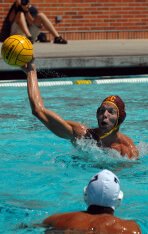
Sarusi in action for USC. Photo: USC Athletics
- So that's what's always been interesting to me about San Jose State is that you guys set the template to bring this tremendous talent from another place in our country and they got to flourish.
Talk about this history, Bruce and Carlos Gonzalez and really the great history of Spartan water polo.
It was before my time. I know San Jose State was a powerhouse in the '60s and '70s, constantly competing for a national championship. A lot of Olympians came out of there and I know they had very few foreign players or out of state players. And I know they made a big difference contributing to the program success back then. I know Bruce always had a few international players when he was coaching at West Valley College as well.
The current West Valley head coach, Willy Rodriguez, he was [from] Puerto Rico. He's the head coach at West Valley. Played for Bruce as well, played at Pepperdine, came back to coach West Valley.
[West Valley College's Willo Rodriguez on the past, present and future of Puerto Rican water polo]
You can see a few great generations coming up and then unfortunately disappearing for another ten years competing internationally. I think they see opportunity here in the continent and getting great education and also job opportunities afterwards.