
On The Record: UCLA Men’s Water Polo Coach Adam Wright
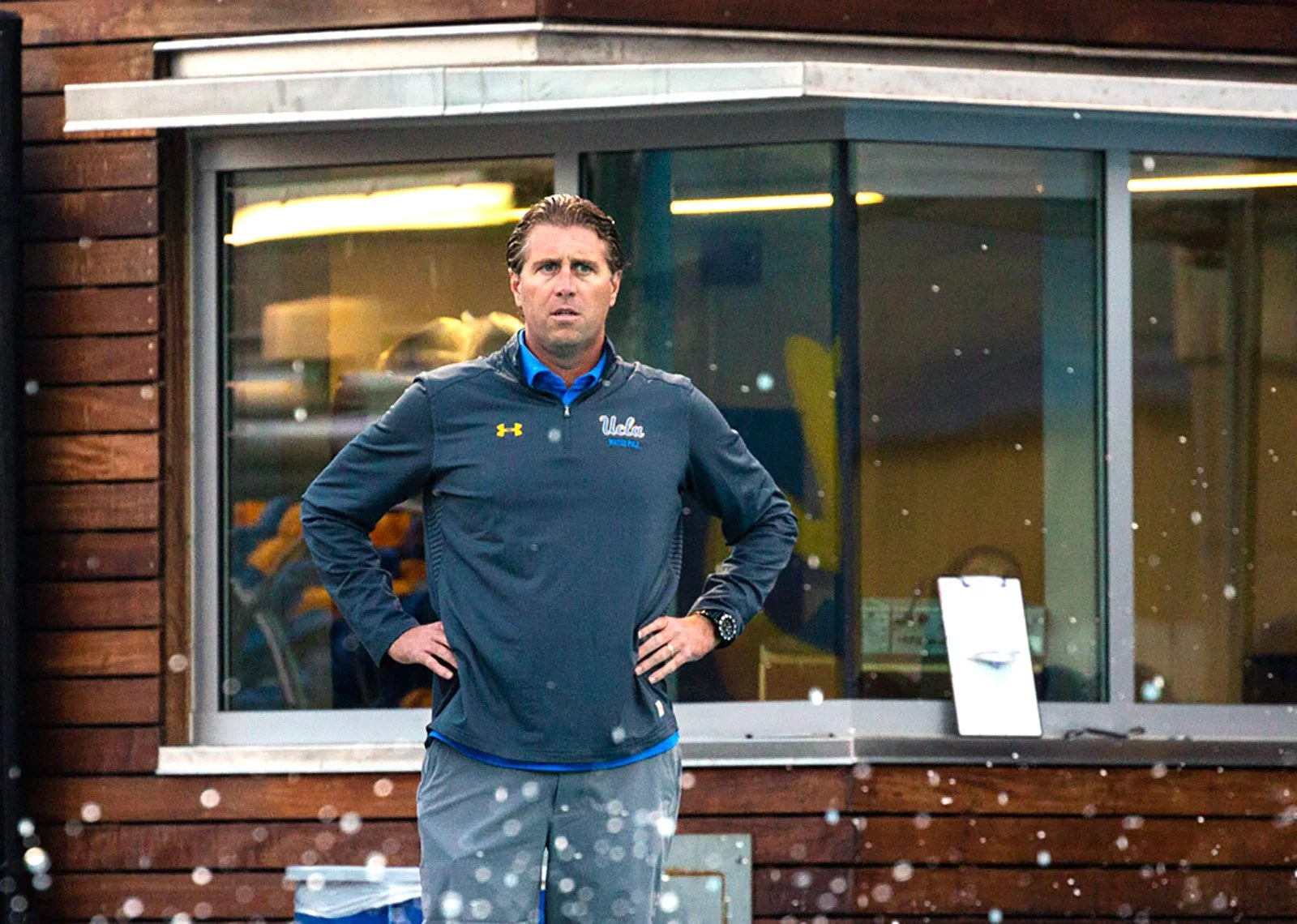
Adam Wright, UCLA Men’s Water Polo Coach, is master of his domain—Spieker Aquatics Center. With 415 career wins, Wright is second only to Bob Horn on the all-time MWP wins list. Photo: Daily Bruin.
Editor’s Note: Your correspondent was recently in SoCal, the cradle of US water polo. As part of my time in the Golden State, I took in a UCLA men’s water polo practice at Spieker Aquatics Center. As has been my habit since I started following water polo in 2012, I spoke with Adam Wright, Bruins’ men’s coach and one of the country’s top water polo strategists.
This interview edited for content and clarity
- First, how is everything in Adam Wrightland? Just last week UCLA lost to Stanford?
Two weeks ago.
- Okay. Not surprising; last year the same thing happened, right? Where you guys win MPSF, have a great run and then you stumble, right?
Well, last year we lost to SC in conference play. But same deal.
- It's going to happen, right? I mean, you guys [Big Four] are all pretty close.
Play each other all the time.
- Let’s talk about Dusty Litvac, your former assistant coach. He was at Princeton and involved in bringing Pro Reco and FTC and Fordham and you to New York City for one of the best moments in water polo in the city’s history. And now he's back in LA. Thoughts about Dusty’s move.
Last fall with [Pro] Recco and FTC and Dusty put in a lot of work. The reality is, one of Dusty's old players' fathers is also a part owner in Recco, Philip Hammarskjold. He did a lot of the leg work and the financing on that.
[A Water Polo Match to Remember Caps Pro Recco 2025 World Tour]
New York City is a special place, obviously playing there with NYAC. The last time Recco was there playing in the city was when I was on the national team when [Ratko] Rudic was here.
Regarding Dusty, he's established himself as a top coach. He transformed Princeton into—and Princeton's always been a great institution and a great program—but the consistency he's created there in terms of getting that program to the NC2A, not only getting to the NC2As, but really going there and competing at the NC2As is something that's a little bit different than in the past years from a consistency standpoint.
My hope is that the program stays at a high level. It's critical for the sport. It's critical for representation from all over the country at NC2As. So my hope is they're able to continue, but there's no doubt [it’s] a tough loss for them with Dusty moving back. The reality is Dusty has a family [here], he and his wife are from here.
So I got that decision. It wasn't an easy one. I know the timing was very difficult for him, but in the end it was a family-based decision. It wouldn't be easy for anyone to build something like you built and have the team that he had to walk [away from], but family first. He made that decision, which I know was very tough. We're obviously very close.
He'll do great things at LMU too.
- Talking about family, I spoke with James Robinson-O'Brien, your new women's coach. His dad played polo here, his brother played here, both his sisters came here. Even his mom is a Bruin.
In Westwood, family has two meanings. There's your immediate family and then there's the Bruin family, which is headed by John Wooden. Your brother [Randy] played at UCLA when you were here, right?
Yeah.
- The Bruin family, it's hard to resist the lure of coming back to your alma mater and all the connections that you make here, both as an undergraduate student, but also as an athlete.
The reality is the last couple of years, we've had multiple sets of brothers on our men's team.
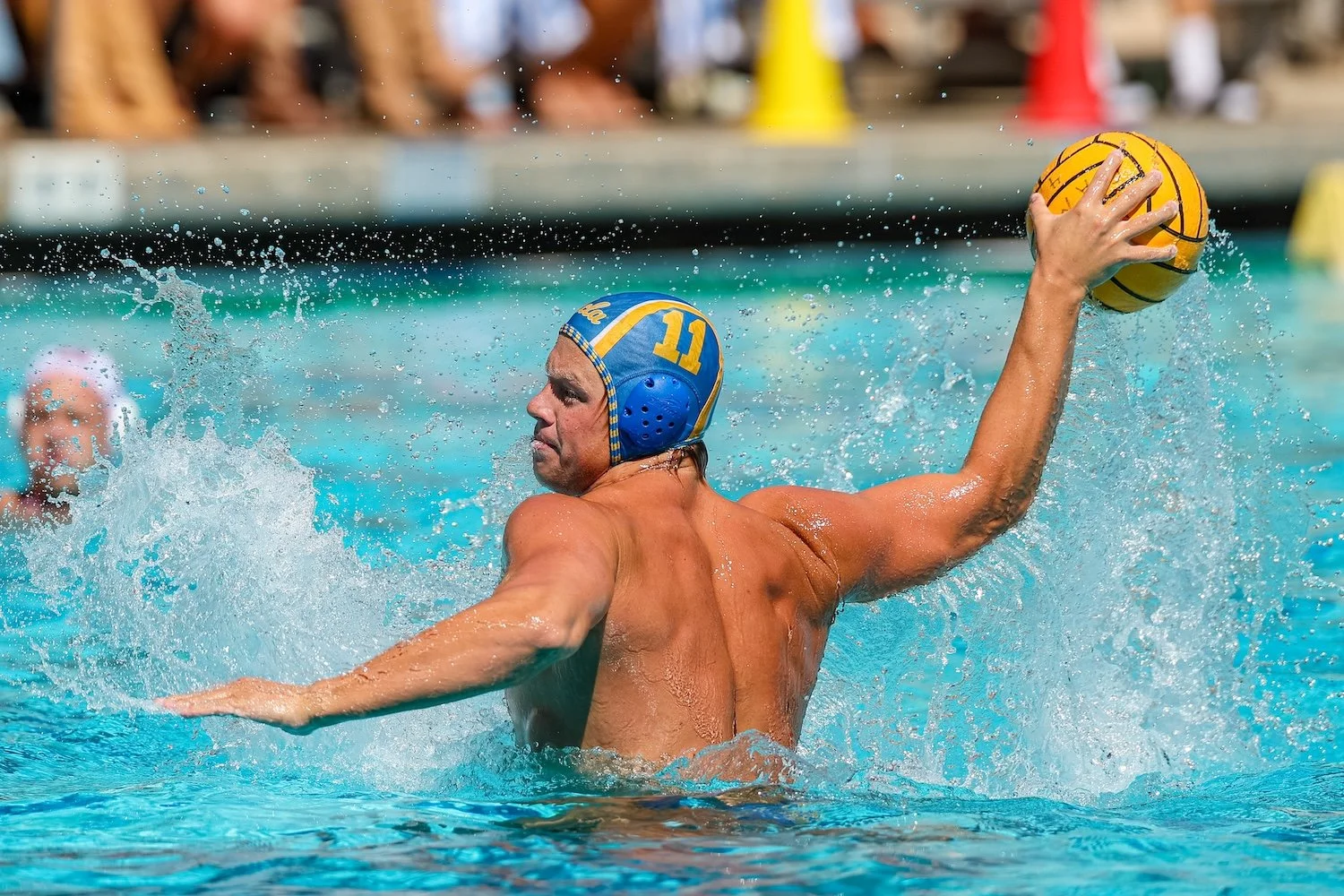
Ryder Dodd, who will team up with brother Chase as the US chase Olympic Gold in 2028, has been money for the Bruins this season (46 goals). Photo: UCLA Athletics.
Chase and Ryder [Dodd], Jack and Ben [Liechty]. We're going to have another one coming from NorCal, Hayden O'Hare and his brother Cade. For me, that piece is important from a familial standpoint because you know what kind of person you're getting, the character you're getting. They know the expectations, which is very important. I don't want anybody coming here and not understanding the [UCLA] expectations.
In regards to the greater Bruin family, James played in our program during a really successful period.
- Tremendously successful! I looked at the record; you won in 2014. In 2015 you had a 57 win streak snapped by USC and didn't win NCAAs that year. Then UCLA won in 2016 and 2017.
His career under your coaching, he could have been winning [NCAAs] every year. [It’s] a tremendous legacy that he now walks into. There's also pressure. You come to UCLA, you're expected to win.
I mean, that's part of the deal. The reality is he did a great job in Hawaii. The program's in a good spot where you have Lauren Steele in goal, which is so critical in the sport. We saw what she did as a high school senior and when she came here her freshman year.
We got a great portal class. So the stakes are high. Second place trophies, they don't display [them] in the Hall of Fame! That's the way of life at UCLA.
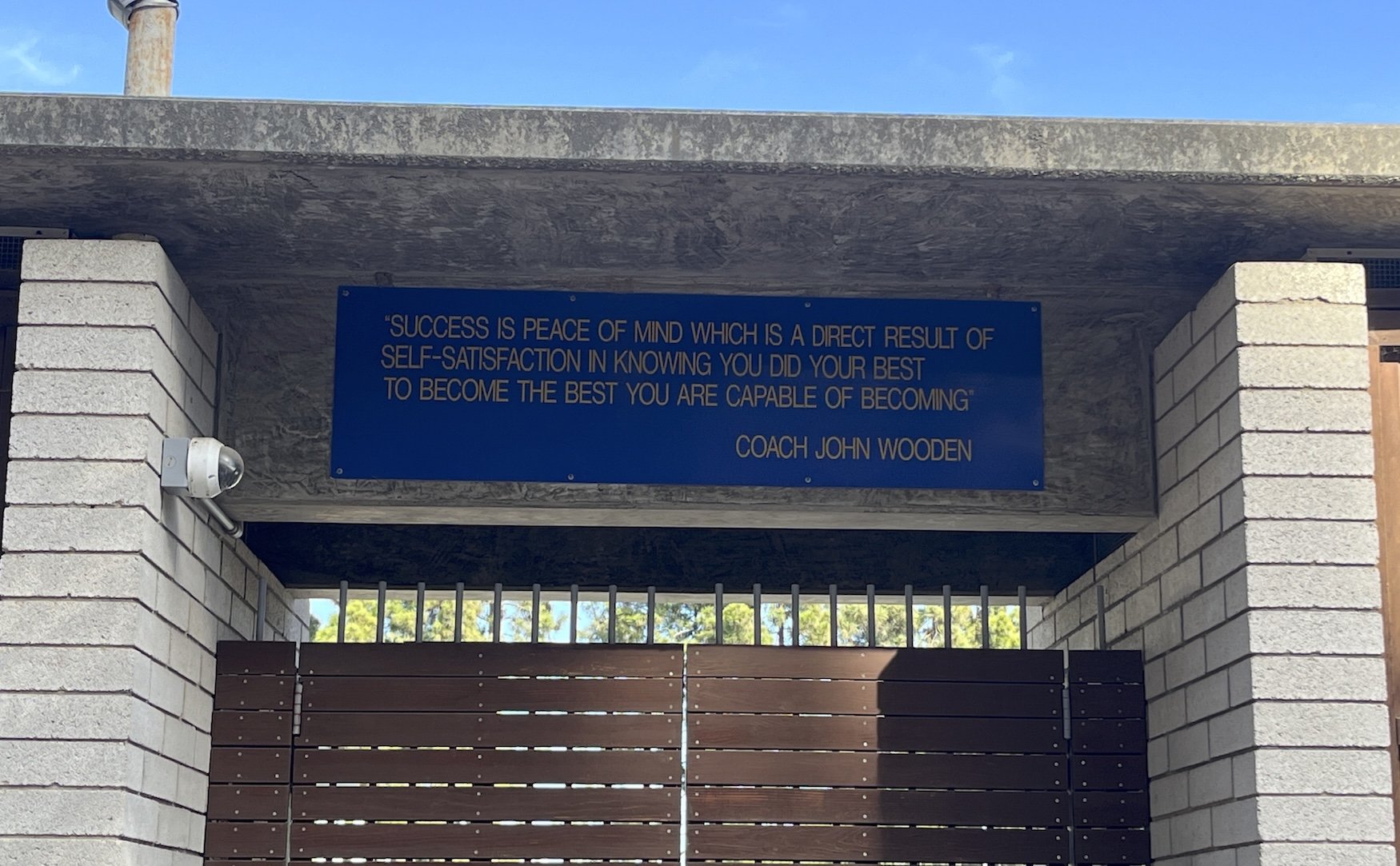
The sayings of John Wooden, the Wizard of Westwood, is everywhere at UCLA - even at the Spieker pool entrance.
He has good pieces; he does a good job recruiting. So he's going to have success, but they have an opportunity this upcoming year based on how the portal went. They've had players who've won, which is important too. That experience is important.
The reality is James has a pretty deep understanding of the department and how it runs. When he graduated, he was in academics. He never thought he wanted to be a coach.
- I mean, you're not always born a coach, I guess.
He started down as an academic mentor and after his first year his goal was really to be in athletic administration. I said: "If you really want to be different from a lot of administrators, you should coach. So you actually understand what it's like to be a coach and what that viewpoint looks like so you would have a better opportunity to really connect from an admin position with coaches having been a coach."
He did it and he was with me I think for two or three years.
- Coach Robinson-O’Brien said 2019 to 2022.
So maybe I think three years and then he went off to Hawaii.
I asked Coach Robinson-O’Brien about this, about having gone somewhere else to prove himself. So again, the pressure—and not everybody's able to fill the big shoes,—but what did you see in James when he was asking you as a mentor, as a former coach, about what comes next?
James' path was a bit different and unique in that he was here as a student athlete during a really special period. It was really competitive in our program. The easy thing to do would be to walk if you're not playing your first year, your second year, your third year, your last year. And he didn’t.
Not only did he commit to doing things the right way, even though he probably wasn't getting what he wanted from a play standpoint, but he got a deep understanding of the elements that are critical in creating a culture. So I knew when he was here as a player, he really understood how to create cohesion and create a group.
Now he's done it on his own in Hawai’i; every coach has to put their own twist on it. But there's no doubt he'll do a great job. But, moving from the second chair to the first chair is a big step and coming from a school outside, the top four to a top four [school] is big. The pressures are different; that's a way of life.
Some people love it and feed off it and it drives them. And some it's very difficult because that's the way these programs have been long before I was here. There's always been success here.
- Coach Robinson-O’Brien mentioned his dad played for Bob Horn. There's a tradition at UCLA that's awesome.
There's no avoiding it. The reality is, he'll do a great job. As soon as this year they could be in position to be successful.
I think him having that familial knowledge of UCLA as a student athlete, what are the pressures of the student athlete? What are the academic pressures? How does that work from a time management standpoint? Who are the right kids to bring into the family per se? That's an important piece because he's done it and that would be helpful.
- Can you help him with any of that? You’re the former women's coach...
My door's always open. The reality is the landscape of college sports is completely different. In fairness to the student athletes, whether it be the women or the men, it's gotten to a point where you needed to have a designated head coach that could be there in the off season, but they also could be out there pushing the envelope with NIL.
What I can say is, when I made this decision [to step down], I thought about why I came back to UCLA? Because I had some other opportunities when I was looking at UCLA too. I came back to the program that I played for to try to put it in a better position than it was.
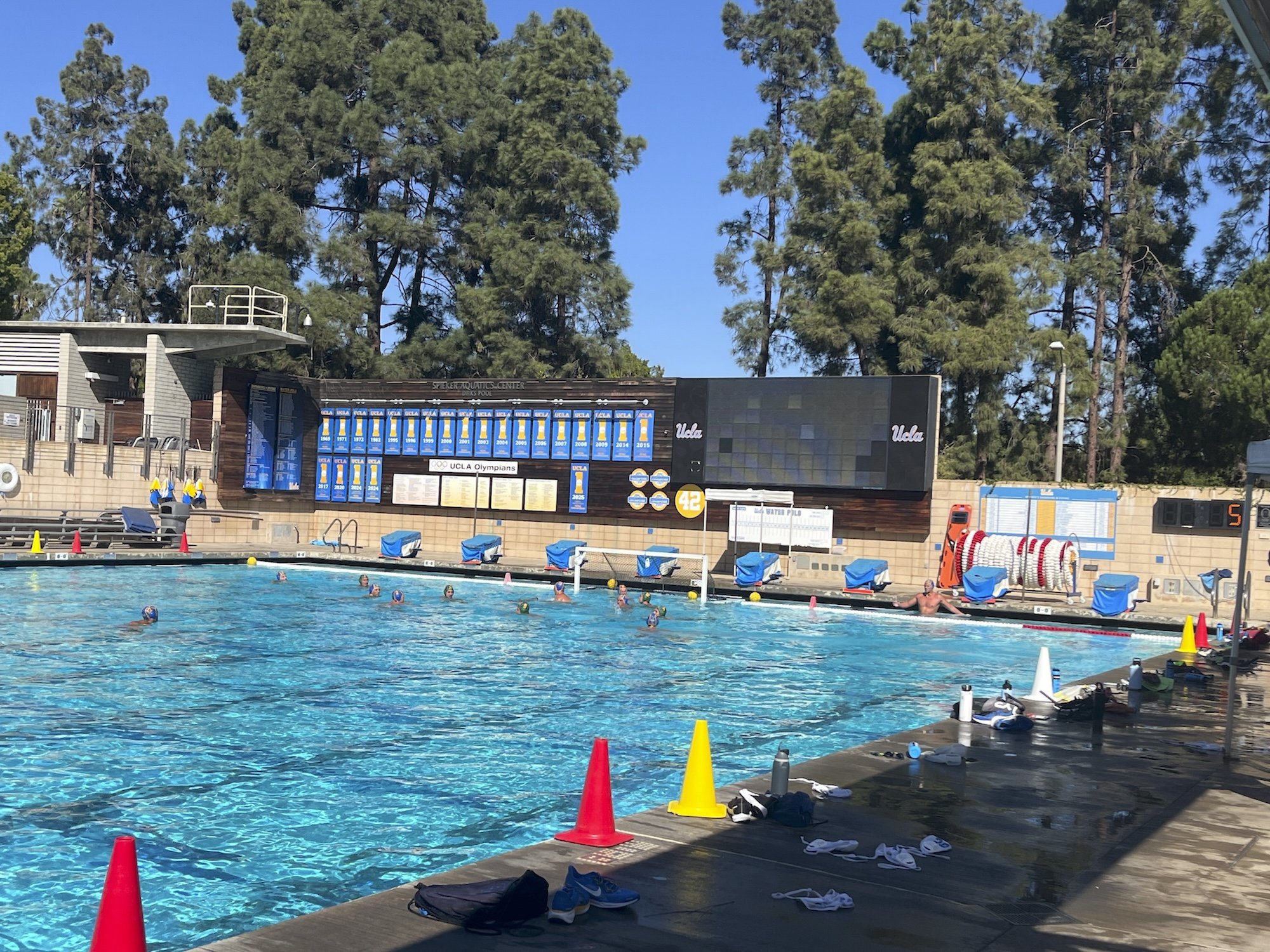
Ia there a more beautiful location for polo in the U.S.? The banners represent Bruin men’s and women’s NCAA titles - a total of 22 (14 men’s, 8 women’s). Coach Wright has directly contributed to half of that total—as a coach and a player.
Doing both programs pulled my time in certain periods of the year away from being my best from team A or B. [Now] my full attention is on the men. I have to keep moving our needle forward. I have to create a platform that positions UCLA—no matter what kind of support we get—to be successful every year.
- You bring up another topic—your new football coach, Bob Chesney, who's undefeated so far this season. Has there been a ripple effect from Coach Chesney’s arrival?
Look, the financial piece, I stay clear of that. I don't know per se, but what I do know is how football goes is how UCLA athletics go.
If they're successful, then we're all going to [be] because the reality is there's two [programs] generating [revenue] from a financial standpoint, but really one, and that's football. If we can fill the Rose Bowl with people because of the success the team's having—which is hard because it's not on campus and it's hot and you have the Rams and you have the Chargers—it changes the budget for everyone.
What I can say is football's the breadwinner. Football is critical. We benefit if somebody from the BIG 10 makes the college championship playoff and final. We all win.
Again, I met with him and had lunch with him.
- What's [Coach Chesney] like?
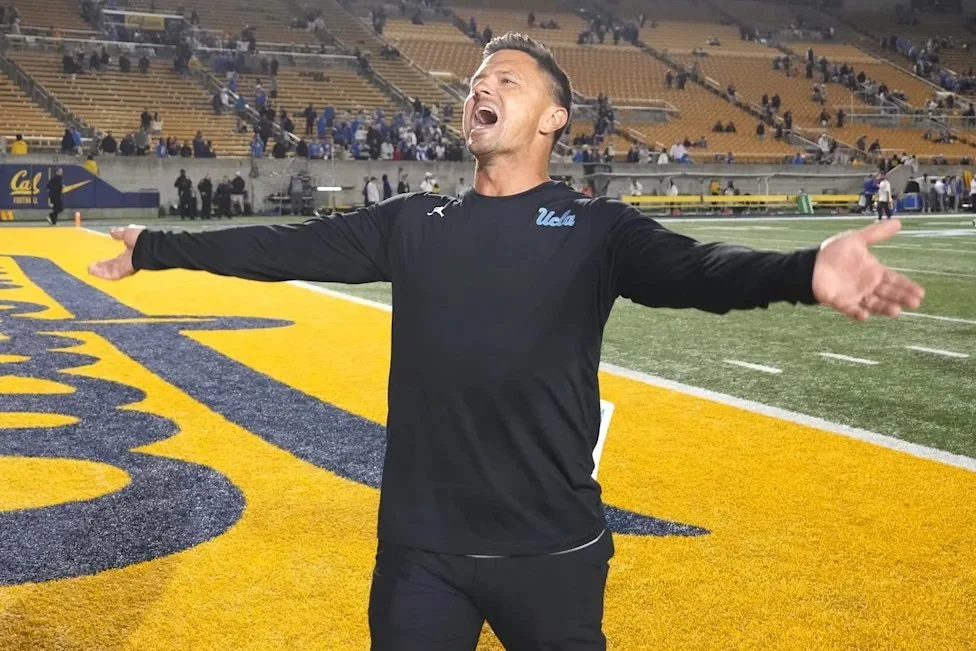
Bob Chesney, savior of UCLA Athletics? Photo: USA Today
He's full of energy and he's so positive. I've gone to a couple practices and like I told the guys, there's no secret. It was so clear that nobody had a choice on how to do things. They're just going from one thing to the next. And you're either in and you're doing it the right way or you're probably not going to be a part of it. There's no secret; you don't win games the way they've won games unless you have culture, unless you have belief, unless you have confidence.
Beyond that, I don't know. All I know is we're all rooting for them to be successful because it helps us all.
Do we have the budgets of the Oregons, the Alabamas, the this, the that? Probably not. No, we don't. We don't have $50 million.
- 25 million. That's what you guys are doing for NIL money.
But some of those schools have 50, 60, 70 [million] and upwards.
What I can tell from afar, and again it’s from afar, he's changed the culture, he's changed habits, he's changed routines, he's changed approach.
- I was thinking the opposite; that Chesney and UCLA football would be a vortex and draw in all athletic department resources. And you talked about how the landscape is changing; what happens to the Olympic sports that are at best revenue neutral, at worst are deficit sports?
Look, UCLA over the test of time is an Olympic sports school. You can go back to track and field Jackie Joyner-Kersee, the list goes on swimming and water polo, gymnastics, men's and women's. It's crazy.
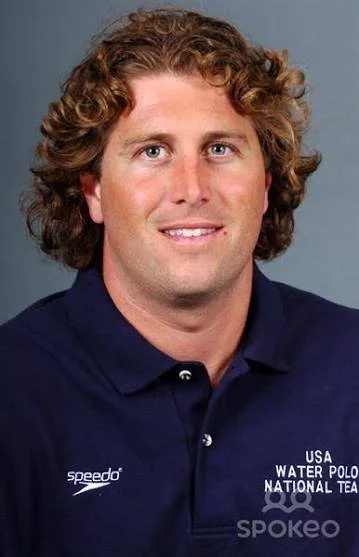
Wright knows Olympics success; a silver in 2008
It really is important that Olympic sports get hardware. It is important for the school, but there's no doubt we have to be creative in how we stay above ground. And that's some of my decision making. We get supported, great, but we want to stay ahead of time. You don't want to be reactive.
I'm not saying it's going there. God, I hope not because Olympic sports are so important for the country. We, the universities, are the ones developing Olympians.
My thing, from a football standpoint, we need them to be successful. If they're being successful because they're getting more funding, then great. And then we got to figure out our own path.
While that's happening and while they're building, we can't just sit back and say, oh, it's football, it's on football. No, you have to be out there. You have to be proactive. My focus has always been the program, the guys or the women's at times both, but now I can focus on the men's water polo program.
- The Olympics are coming to Los Angeles in two years. Do you know where the Olympic water polo final will take place?
I think Long Beach.
- Does it matter not having it in SoFi as part of what will be the epicenter of the LA Olympics?
I don't know if the depth of the pool is the issue because I think they would move it, but it's exciting. This summer [UCLA] had nine of the 16 guys on the roster. Which is great.
I can say now doing this for almost 20 years, and playing for our country, the level of talent and abilities and players that we have, from Paris forward, is incredible. Even from 2008, the group that was in Paris from top to bottom, really not that close from a physical, from a dynamic standpoint.
We have pieces that were maybe more students of the game per se, but the game's changed too. And you look at kids like Ryder [Dodd], Ben Hallock obviously is a big... That's going to be a big loss.
If he comes back, they should absolutely have a great opportunity to be in that last game.
- So, are we getting the 1984 LA Olympics (Olympic Silver) or the 1996 Atlanta Olympics (7th place)?
[Life] with Ben and life without Ben are two different things. If he's back in the mix, they have all the pieces they need to be in a position like ‘84.
- You just signed on with the Brazilian national team to get them into the LA28 Games. Why would the country’s top polo coach go south for an Olympic berth?
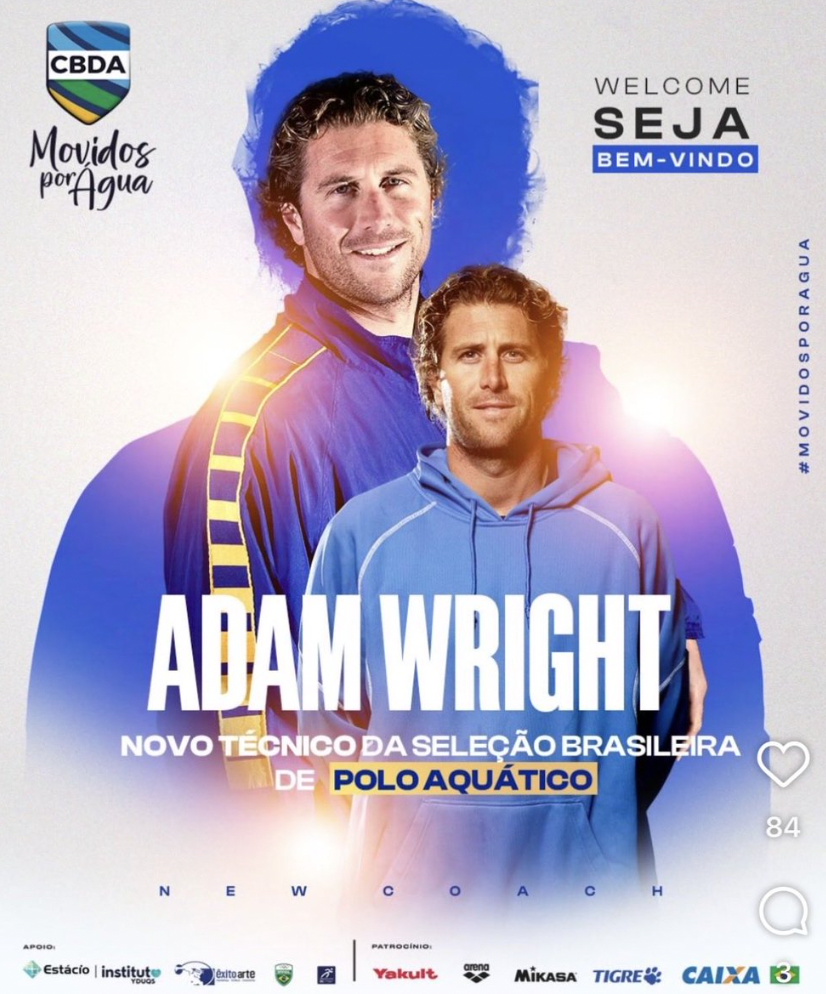
This is sure to shake up discussion about the LA28 Olympic Water Polo competition.
Yes, it’s true. It’s pretty simple from a professional development standpoint. This is an incredible opportunity.
Second, I have had many Brazilian players over the years and in fact as a high school junior I went and played in Brazil with an exchange student who was at Wilson, Marcelo Zelada.
The opportunity to help some of my old players reach their dream of representing Brazil at an Olympic Games made this decision easy. These players gave me and UCLA all they could and if I can repay them in some fashion, I owe that to them.
You never know how long you have on earth and you know we all have goals.
My goals and standards have not changed for UCLA. In fact, they have only gone up after this past year.
This new adventure will make me a better coach and expose me to a whole new horizon of players.
I am grateful for this opportunity and excited to show up Monday with our guys at UCLA.