
On The Record: Fordham Water Polo Coach Brian Bacharach
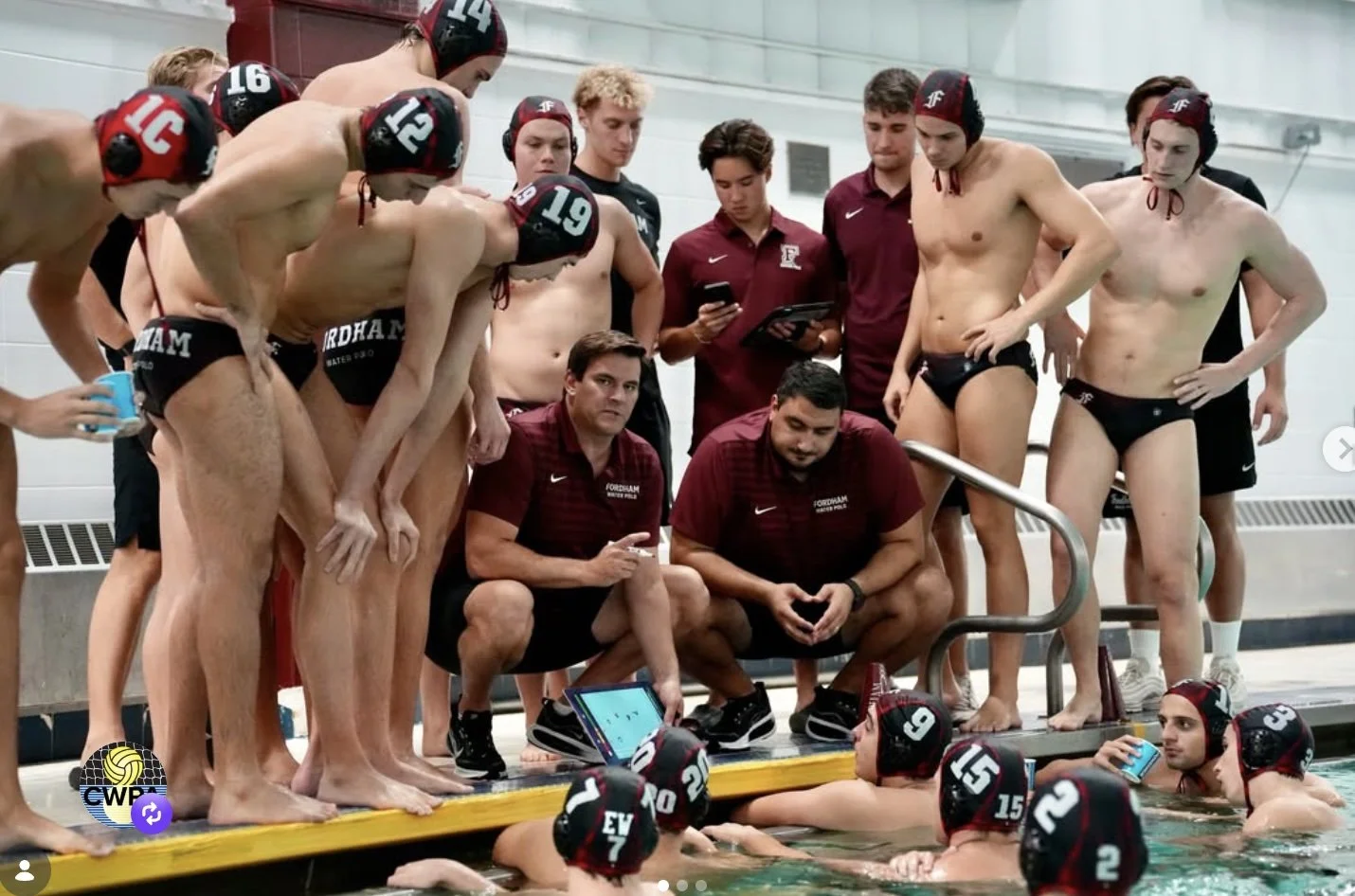
Fordham Head Coach Brian Bacharach and Associate Head Coach Ilija Duretic with their Rams at Messmore Aquatics Center in the Bronx. Photo: Fordham Athletics
THE BRONX, NY. In what has now become an annual occurrence for your correspondent, a visit to the Messmore Aquatic Center on the Fordham University campus results in:
- A win; the Rams have now won 31 in a row at home, last loss: Armistice Day, 2022 to St. Francis College, a program that no longer exists.
- An interview with Rams’ head coach, Brian Bacharach.
To set the stage, the date, September 13, saw a 14-10 Fordham win over #11 ranked San Jose State in the Spartans first-ever visit to the Bronx. Of note, the Rams went on a seven-goal second quarter spurt to defeat a Spartan side featuring a Cutino Award contender (sophomore Sam Keightley) and which has qualified for two of the past three NCAA tournaments (2023, 2025).
[On The Record: Gabor Sarusi, San Jose State Water Polo Coach]
The story is that Bacharach and his staff, including Associate Head Coach Ilija Duretic, have assembled six national team players on this year’s roster. If there was ever a time for Fordham water polo to succeed, now is that time.
[Fordham Water Polo Taking Over U20 European Championship]
Bacharach, who has been on Rose Hill for a baker’s dozen years, has increased the stakes this season for his team. Including matches against #9 Pepperdine and #11 San Jose State, the Rams schedule includes top-ranked UCLA three weeks ago (a respectable 16-11 loss) as well as matches against #4 Cal and #2 Stanford in early November.
I spoke with the Fordham coach about his team and his singular focus—which is to make Ram water polo the nation’s best.
This interview edited for content and clarity
***
- You've been here 11 years?
Five years as an assistant. I started in 2013, so I think it's 13.
- You are now part of the Ram fabric!
Whatever that means, but yes. [Laughs]
- Did you expect The Bronx was where Brian Bacharach was going to spend much of his life?
No, I didn't, but it's a funny story. It was 2012, and I had moved to New York for my now wife, [then] girlfriend at the time. She was in grad school at NYU, and I was in grad school at USC [and] helping at [Loyola Marymount].
I said, "Should we do New York or LA?" Because she was in the entertainment industry, she said, "I'm liking New York."
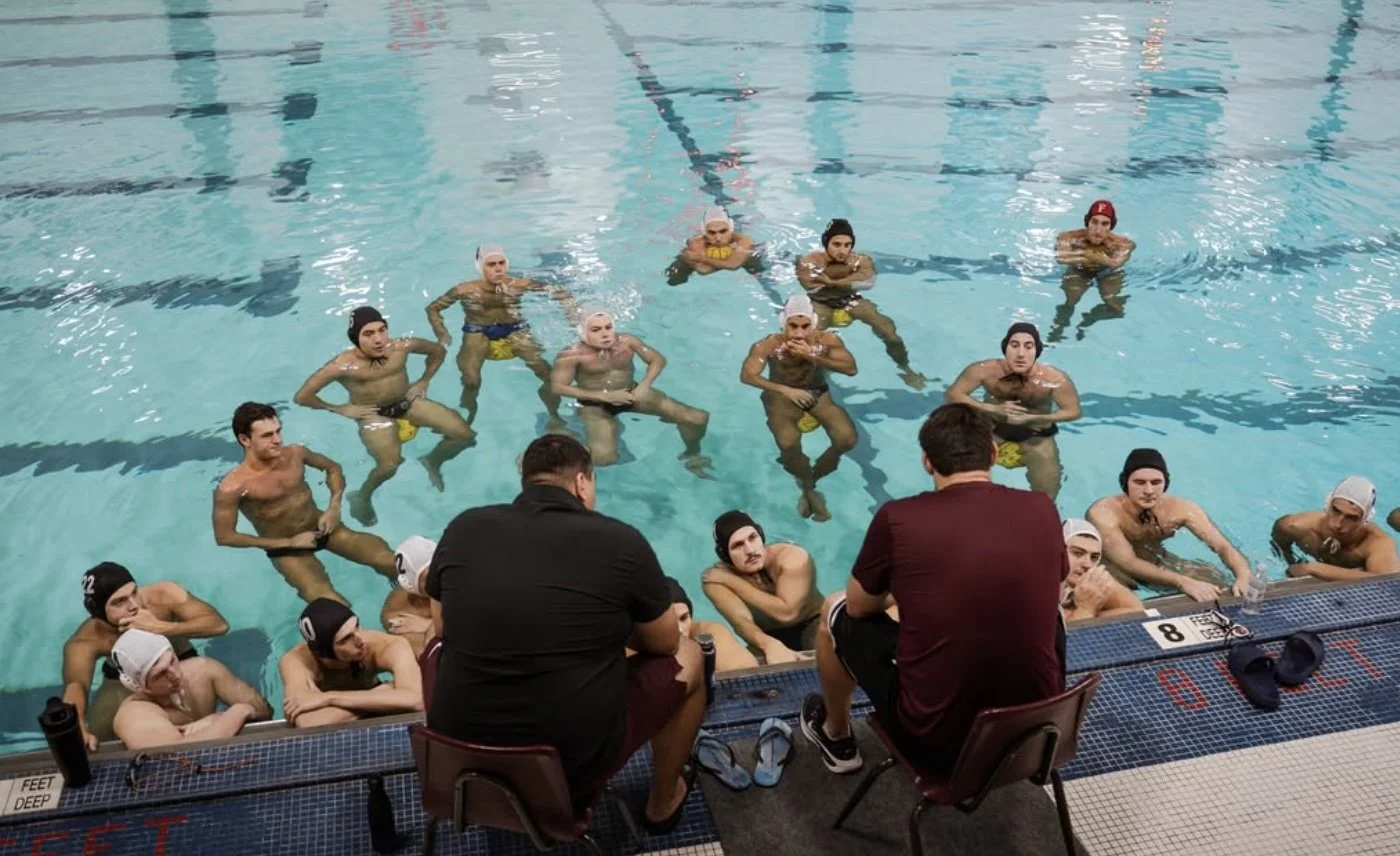
I thought: "I really want to live in New York." So, I moved here. No job, nothing. I had coached at the high school level at my alma mater, De La Salle. I had been a player at Cal, I'd been a player at De La Salle when I was in high school. The first time in my life I wasn't a part of a water polo team was fall of 2012.
I decided to come to a game here in 2012. They won six games, seven games that year. Bill [Harris] was the [Ram] coach at the time. It was the Fordham vs. Iona game and [the Judge Cup].
[Fordham’s Bill Harris on New York City Water Polo: “We Just Had Fun!”]
Fordham ended up winning that game. I saw the environment here, I saw the pool, I saw everything around it. It felt like there's something that I [could] help with. I reached out to Bill and I said: "Can I help you in some way?"
That spring I helped them with some of their practices, then I got more involved over time.
- The possibilities [here] are obvious. Fordham is a great brand in New York City for education, but it's also the birthplace of the Vince Lombardi legend. Plus, you have a great aquatics facility.
There's a lot of benefits. The potential was there, but it wasn't something that happened overnight. It took time to do different things—from recruiting to what we were doing as a team in the pool to training.
The biggest change I think was how the administration [now] looks at us. And, the alums were huge, but I think they were always there. They always saw the potential as well, but they needed the administration. You got to get everything working together to be able to run a top program. But once the administration was behind us, things have gotten better.
- That's the other thing, you could look at other local programs—Wagner, for example. They have a decent dorm system and Wagner is a perfectly fine institution. But they don't have the kind of facilities, the academic presence of Fordham.
But, once you start to succeed, how do you and your staff maintain the success and the identity of Fordham water polo.
It's funny. I never—even as an assistant and when I took over as head coach—I never said, "Oh, this is where we can go."
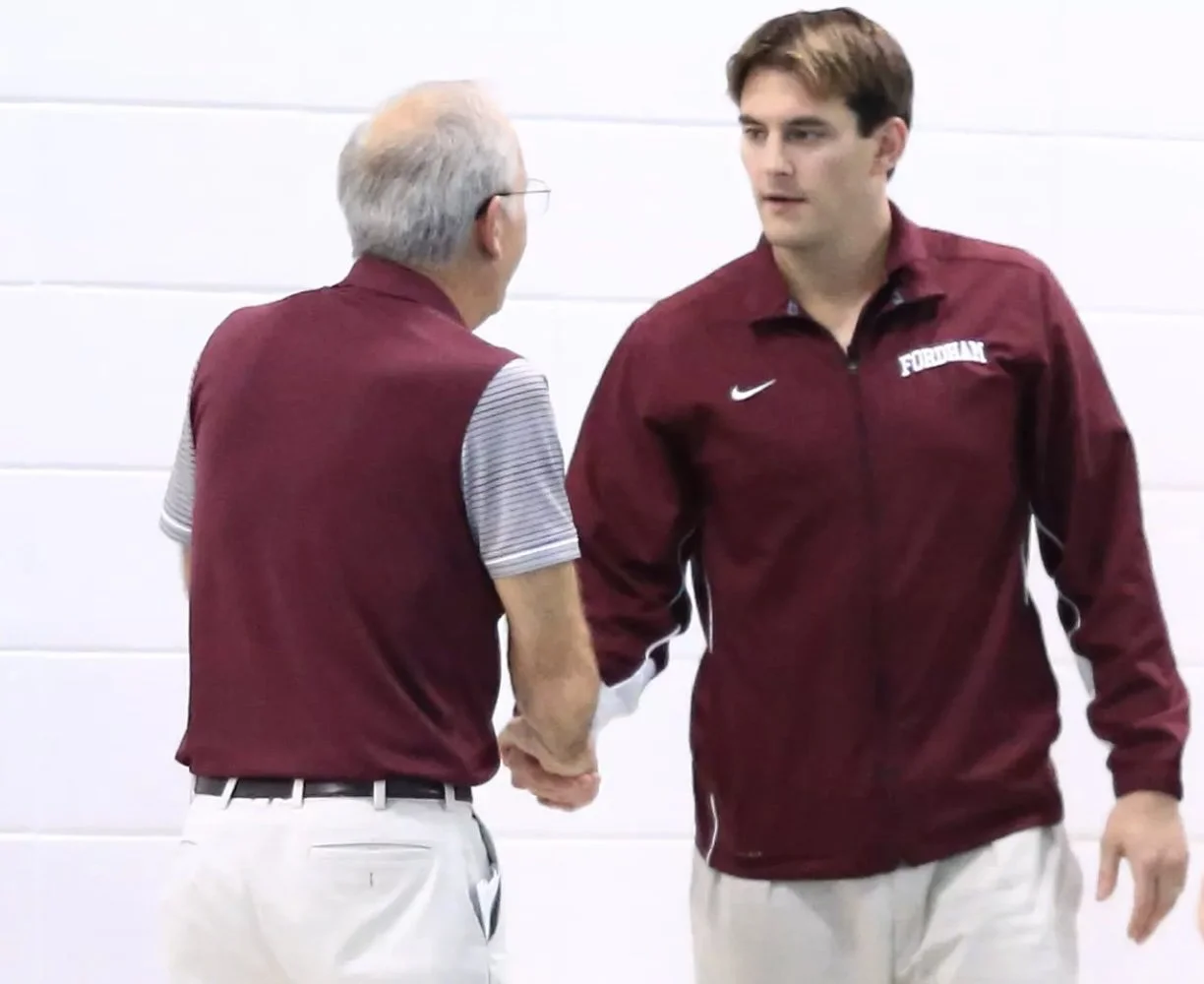
Changing of the guard; Harris hands of to Bacharach in 2019. Photo: Fordham Athletics
Ilija and I say we're both crazy and have an innate desire to continue to push and to succeed. And I don't know what that is about us, but we ended up finding each other and it's worked out very well. Even [in] 2019 [when] we went 24-8 that year, we were second in the league.
I feel like there's room to improve. 2021, we win our first conference championship, there's room to improve. We've never been willing to settle. I've always felt like there was the next thing we can accomplish as a group while maintaining the consistency and success of what we've accomplished.
I don't know if it's the way I was raised or what, but I know I've never been satisfied with standing still. Until we're national champions, I won’t think we've gone as far as we can.
That's the goal we've set for ourselves.
- That's a tough goal for an East Coast program, given that no team from the East has even made [an NCAA] final, let alone won a title…
When I started to take over as co-head coach in 2019, I didn't say, "We're going to win a national championship."
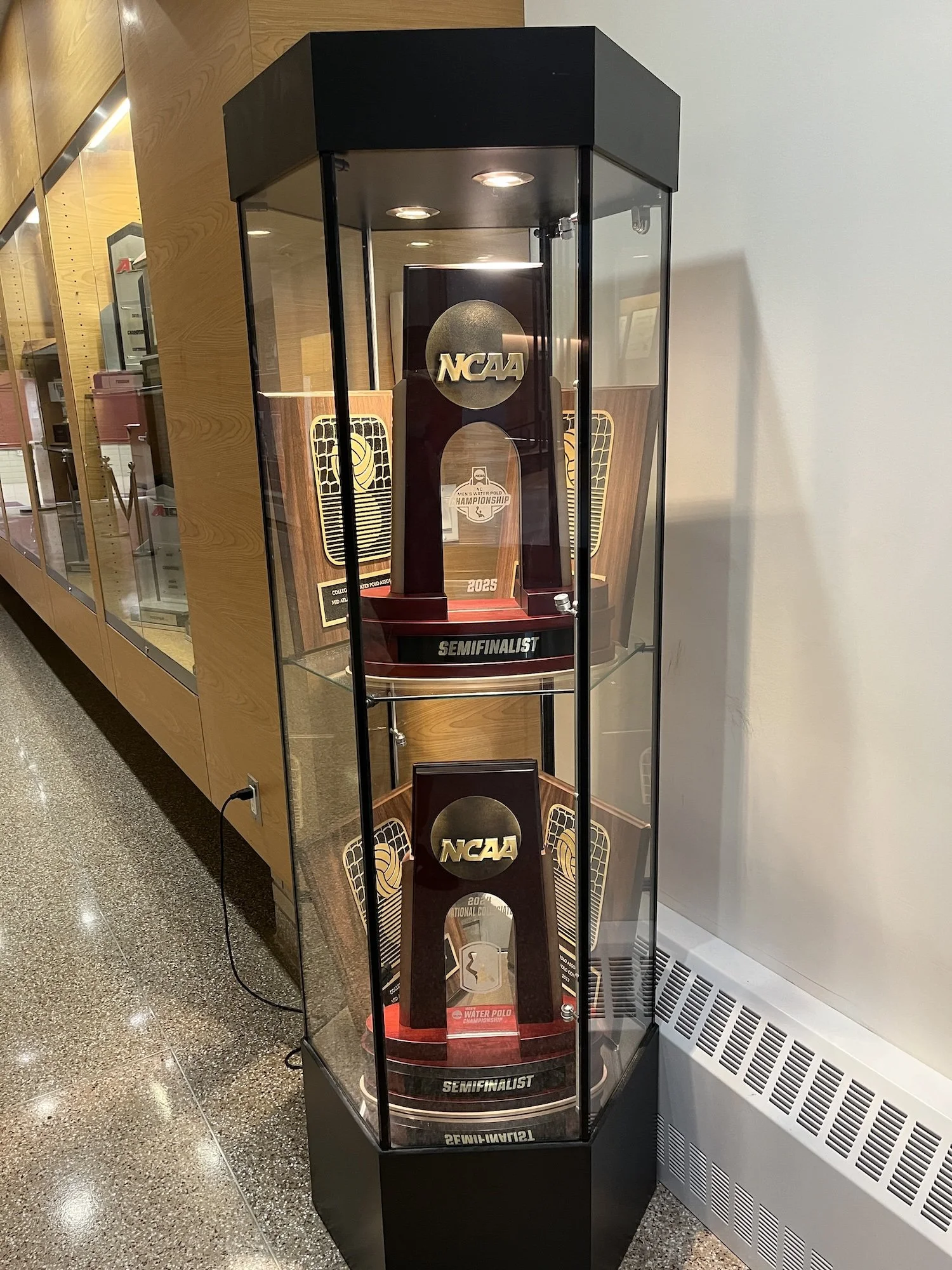
Fordham’s two NCAA Final Four trophies
We were far away from that at that time. What I did start talking about is, [our growth has] been incremental. To hit our goal, first we couldn't get past that play-in game against Princeton.
Let's get past that. Let's get to the [NCAA] tournament. We got there and it was: Okay, what's next? But at this point, we've been to a Final Four twice. Why shouldn't we be shooting for beating those four teams and winning a national championship?
Obviously, you’ve got to get to the game first to win it, but yeah, that's the goal. We talk about it a lot now. I think as we've grown and [as] the talent has grown, our goals can grow. I believe in setting realistic goals, but at this point, I don't think—with the talent that we have in the pool—it's a stretch to say we can compete with every team in the country.
We've had five games the last two years against the Big Four, and two of those have been overtime or one goal games.
- Stanford was a one goal loss?
Cal. Cal was a one goal loss. Two years ago. We have not beaten those Big Four.
We're working towards that. At this point, I think it is an achievable—maybe a stretch—goal, but I do think it's possible.
We're not those [California] teams. We don't have 15 top teams within a 50 mile driving radius of us. We have to train differently. We have to travel more. We have to be smart about how we travel and try to take advantage of those moments. When we have teams like [San Jose State and Pepperdine] who are willing to come out to the East Coast and play us, we have to take advantage of [that].
It's great that we got two wins this weekend.
- The other part of it for East Coast teams, typically you start with local competition. Then you build into the middle of the schedule where you play California teams. But you're booking top teams now and at the end of your season.
Exactly. It goes back to alum support, donor support, administrative support. We're going to California twice this year in the regular season, which we've never done before. We've always tried to pack as many good games as we could when we went out to California. This year we're going twice.
I was talking with our donors, and I said: Look, we've never had the opportunity to just go out there and play [the best] teams. We've always tried to incorporate other games into [our trips].
Now, is the result going to be any different? I have no idea, but the thought process is those teams get to play each other all the time. They get to focus on each other. Well, for the first time ever in our program's history, we're playing UCLA on the first day that we go out to Southern California and then we're playing Cal and Stanford [in November].
I'm really excited about that. Like I said, I have no idea if that's going to change our fortunes, but I think mentally it's different.
And it's essential. They're in the richest water polo region in the country and they're competing against each other, measuring each other up.
- You also got West Coast referees [for Pepperdine and San Jose State]. You had Joe [Peila], one of the best in the sport.
That was also by design. I didn't pick Joe specifically for this game, but I talked to the head of referees and said, "Look, I'm willing to help contribute for the cost of getting top referees to referee our top games that we're scheduling on the East Coast."
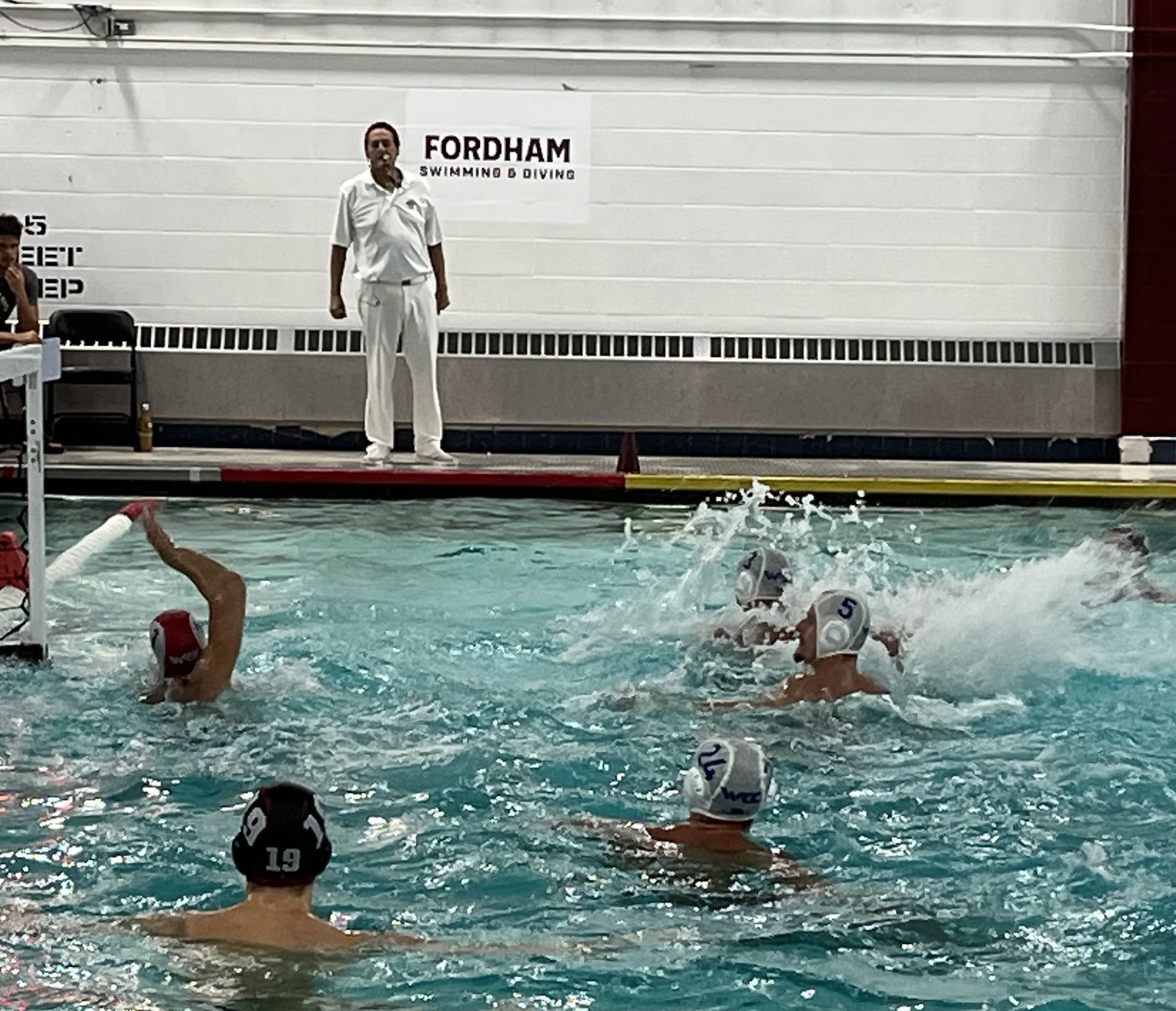
Referee Joe Peila, who whistled the 2016 Olympics, on deck in The Bronx. Photo: M. Randazzo
It didn't have to be Joe, but he's obviously a world-class referee. It could have been [Alex] Stankovich. It could have been any of those top referees.
I also don't want the experience for the guys coming from the West Coast to be bad. We want to have a crowd, we want to have an environment, we want them to have a good experience so that they want to come back and play us again.
- It’s interesting that that would be part of your desire, that this is not a one-off…
Yeah. I don't want it to be a one-time thing. I heard Merril (Moses of Pepperdine) say in an interview that he wants to do this again. We signed a two-year deal with them where we'll go play them next year [in California].
I hope he wants to do it again after the first two years. I would sign up for what we had Friday night every single year because it was a great environment in the stands. It was a great environment on the pool deck. I felt like both teams really battled, but it was great college atmosphere.
That's all you can really ask for.
-Last thing: Dusty Litvak left Princeton. He has family in California and the pull to the West was too strong.
Here you are 13 years in and you have a family here, but there's got to be almost, if you will, the siren call of, "Oh, you want to make it in this sport? The East Coast is never going to be the place. You've got to go West."
Honestly, I have zero desire at this moment to leave what we're doing here. I think—I've said it many times—this is now one of the top jobs in the country. There's a different level of, I don't know if I'd call it pressure, but it's just a different atmosphere being in that Big Four world.
We just knocked off two top 10 teams, and by four goals each with basically freshmen and sophomores. We have two very good juniors there. We got a couple seniors in the game, but it's a very young group.
We have recruited and built something here that I hope continues to grow. And when I say that I think we can compete with all the teams in the country, it's not necessarily a one year thing that I'm thinking about.
I'm also thinking we've got the majority of this group back next year. We need to continue to work; let's not be satisfied with what happened today or on Friday or two weeks ago. We need to improve on the things that we need to improve on. That's what I'm focused on.
I'm not focused on whatever job may become an opportunity down the road. I'm happy with doing what I'm doing, and I don't see any reason to walk away from it.